

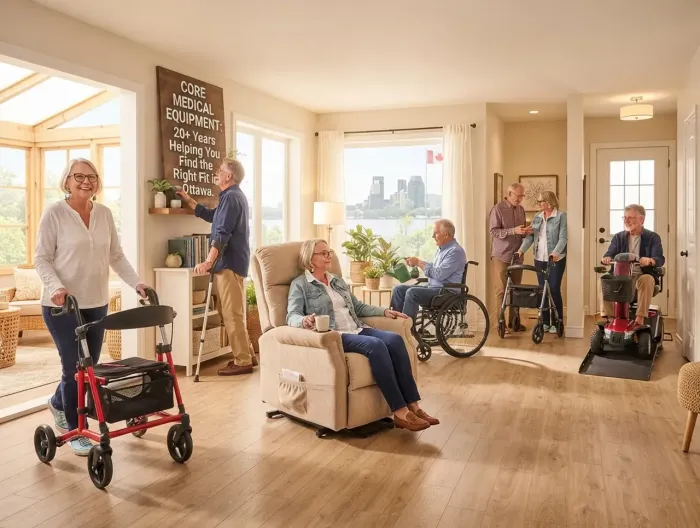
Making a morning coffee, getting to the mailbox, visiting the garden: everyday routines are what make a home feel like yours. When moving around gets harder, the right mobility aid can help you keep doing those things on your own terms.
At Core Medical Equipment in Ottawa, we’ve spent over 20 years helping individuals, families and caregivers find mobility aids that fit their home, their routine and their comfort. Below are seven of the most useful options, what each is best for, and what to think about before you choose.
The most popular mobility aids for staying independent at home are four-wheel walkers (rollators), three-wheel walkers, ergonomic crutches, manual wheelchairs, power wheelchairs, mobility scooters and lift chair recliners. The best choice depends on your space, strength, balance and daily routine, which is why a personal fitting with a mobility specialist matters.
A rollator is often the first step up from a basic walker. Four wheels allow smooth, continuous walking, and most models include hand brakes and a built-in seat for rest breaks.
Great for: longer walks around the house, trips to the corner store, and anyone who wants a seat close by.
Consider: door widths and hallway turns, handle height, and how easily the frame folds for the car.
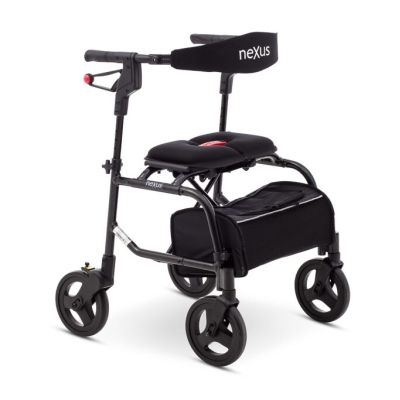
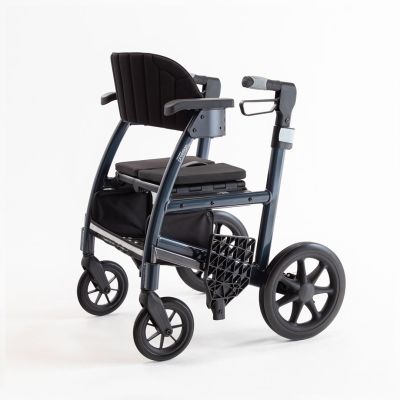
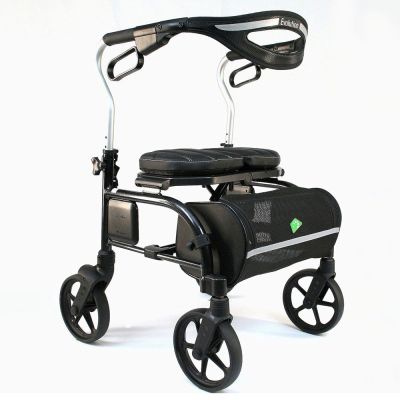
Lighter and tighter-turning than a four-wheel model, a three-wheel walker is a smart pick for compact Ottawa condos, townhomes and older homes with narrow doorways.
Great for: small kitchens, tight bathrooms and hallways, and users who want a lightweight frame.
Consider: these typically don’t include a seat, so think about where you’ll rest during longer outings.
Curious about walker features? Read our guide to Triumph walkers at Core Medical Equipment.
Crutches aren’t just for a short-term injury. Ergonomic designs with shaped grips and cushioned supports are built for comfort during longer use, helping people move around the house during recovery.
Great for: post-surgery or short-term mobility needs at home.
Consider: grip comfort, adjustable height, and a proper fitting so you’re not straining your hands or shoulders.
See our full guide: Ergobaum Crutches in Ottawa.
A manual wheelchair gives you a dependable way to get around when walking distances are tiring. Many people use one for part of the day, such as outings, appointments or busy afternoons, while still walking at home.
Great for: shared use between you and a caregiver, travel, and stored-away convenience.
Consider: seat width and depth, cushion comfort, weight, and whether you need a heavy-duty frame.
Not sure which style fits? Compare options in Strongback Wheelchairs in Ottawa: Comfort vs. Heavy Duty.
For people with limited strength or endurance, a power wheelchair offers effortless movement with joystick control, so you can move room to room without relying on someone else for a push.
Great for: independence indoors and out, with adjustable controls and comfort seating.
Consider: turning radius in your home, battery range, transport and charging space.
Scooters are well suited to people who can sit steadily but find longer distances tiring. They’re popular for errands, neighbourhood outings and community events once the weather cooperates.
Great for: outdoor independence, sidewalks, errands and social outings.
Consider: storage and charging at home, ramp or entry access, and portability if you travel.
Browse seasonal picks in our Best Wheelchairs & Mobility Scooters for Ottawa Summer 2026 guide.
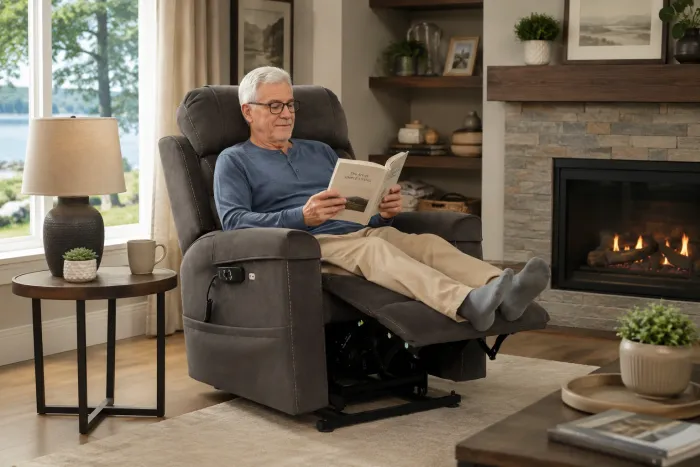
Standing up from a low sofa can feel like a big effort. A lift chair recliner gently raises you toward a standing position and lowers you back down, helping make sitting and rising a smoother part of your day.
Great for: the living room, reading, TV time, and anyone who finds standing from a chair tiring.
Consider: room size, seat height, upholstery and recline position.
Learn more about one popular model in our post on the Pride Muskoka LC-475 Lift Chair Recliner.
Mobility aid | Best for | Typical home fit |
|---|---|---|
Four-wheel walker (rollator) | Longer walks with a built-in seat | Medium to larger spaces |
Three-wheel walker | Tight turns and lightweight handling | Condos, small rooms, narrow halls |
Ergonomic crutches | Short-term or recovery use | Most homes |
Manual wheelchair | Shared use, outings, appointments | Wider doorways |
Power wheelchair | Effortless indoor and outdoor movement | Needs turning space and charging spot |
Mobility scooter | Neighbourhood and outdoor trips | Needs storage and a ramp or level entry |
Lift chair recliner | Comfortable sitting and standing | Living room or bedroom |
A good fit matters more than any single feature. Before you decide, ask yourself:
Margaret, a retired teacher in Ottawa’s east end, loved her morning walks but found longer distances tiring. Her daughter booked a visit with us. After talking through her routine and measuring her front hall, we matched her with a lightweight rollator with a built-in seat. Now she’s back to walking to the neighbourhood café, with a place to sit if she needs a moment. (Illustrative example; individual needs and results vary.)
Don’t Forget the Rest of the Home
Mobility aids work best as part of a whole-home setup. Pairing them with bathroom safety equipment and the right bedroom equipment, such as a comfortable medical bed mattress, helps every room feel easier to navigate. Our daily living aids can take care of the little things in between.
The right mobility aid can make everyday life at home feel easier, safer and more your own. Explore our full range of mobility aids in Ottawa, or contact us to book a personalized consultation. Visit us at 595 Montréal Rd, Suite 101, Ottawa (Mon–Fri 8:30 AM – 5 PM, Saturday by appointment) or call (613) 842-7474.
This article is for general information only and is not medical advice. Please speak with your healthcare provider, occupational therapist or physiotherapist about your specific needs.
It depends on your needs. Walkers and rollators are the most common choice for steadier walking around the house, while lift chairs help with sitting and standing, and wheelchairs or scooters help with longer distances. A personal consultation is the best way to find your fit.
A rollator has four wheels, hand brakes and usually a built-in seat. A three-wheel walker is lighter and turns more easily in tight spaces, but typically doesn’t include a seat.
Yes. Renting can be a practical option for short-term recovery or while you decide on a long-term solution. Visit our rental page or ask our team about availability.
We strongly recommend one. Handle height, seat size and controls all affect comfort and ease of use. Our team works with you, and with your occupational therapist or physiotherapist when involved, to find the right fit.
Call (613) 842-7474, email info@coremedequip.com or visit our Ottawa showroom. We’ll set up a no-obligation consultation to talk through your needs.