

Getting in and out of your home safely shouldn’t be a daily challenge. Yet for many Ottawa families, a single step at the front door, a slick basement staircase, or a bathroom threshold can quietly become the biggest barrier to independent living. Ramps and railings are two of the simplest, most cost-effective ways to remove that barrier; but knowing which one you need, and when, isn’t always obvious.
In this guide, we’ll break down exactly when a ramp makes sense, when a railing is the better fix, and when your home benefits from both. Whether you’re planning ahead for aging in place, recovering from surgery, or supporting a loved one with a mobility condition, this will help you make a confident, informed decision.
Falls are one of the leading causes of injury among Canadian seniors, and most happen at home, on stairs, at entryways, and in bathrooms. Home accessibility modifications like ramps and railings aren’t just about convenience; they’re a proven way to reduce fall risk, preserve independence, and delay or prevent the need for long-term care facilities.
For homeowners in Ottawa, winter weather adds another layer of urgency. Icy steps and slippery ramps without proper railings are a serious hazard from November through March, which makes choosing the right equipment, and installing it correctly, especially important.
A ramp is the right solution when the core problem is a change in elevation that a wheelchair, scooter, walker, or someone with limited leg strength cannot safely navigate. Common situations include:
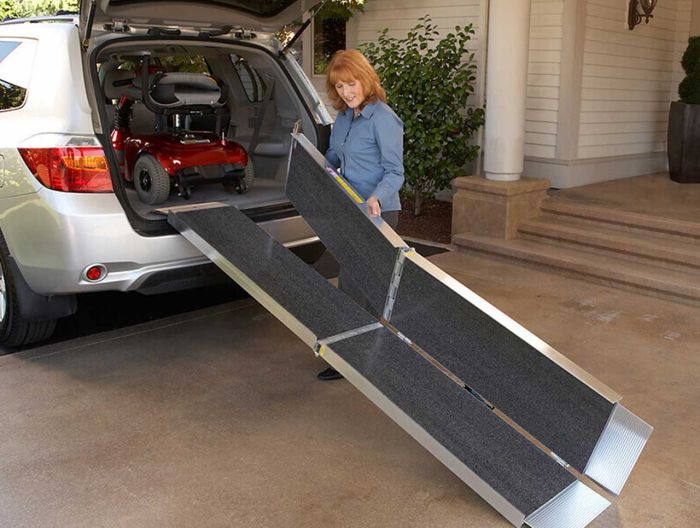
Not every ramp situation calls for a large permanent structure. At Core Medical Equipment, we carry a full range of accessibility ramps, including:
Railings solve a different problem: stability and balance while walking, standing, or transferring, even when there’s no wheelchair involved. You likely need a railing (rather than, or in addition to, a ramp) when:
Railings are often the first, lowest-cost accessibility upgrade a household makes, and they pair naturally with our bathroom safety products, such as grab bars near the tub, shower, and toilet, where slips are most common.
Many homes need ramps and railings working together, not one or the other. A ramp without a railing can actually increase fall risk, especially on an incline or in wet or icy conditions, there’s nothing to hold onto if balance shifts mid-ramp. Similarly, a home with a railing on the stairs but no ramp still leaves wheelchair and scooter users unable to enter at all.
If your household includes more than one person with different needs, for example, a wheelchair user and an aging parent who still walks but tires easily, a combined ramp-and-railing setup is usually the most practical, future-proof solution.
Situation | Ramp | Railing | Both |
|---|---|---|---|
Wheelchair or scooter access needed |  |  | |
Unsteady on feet but still walking | | ||
Existing outdoor stairs, no wheelchair use | | ||
Recovering from surgery, temporary mobility loss | | | |
Icy or sloped entryways in winter | | | |
Bathroom or shower threshold | | | |
Planning ahead for aging in place | |
Every home is different, and the right solution depends on entryway slope, available space, local weather exposure, and the specific mobility needs of the people using it. Before buying or installing anything, it’s worth having a professional assess:
Our team offers in-home consultations to help you avoid costly guesswork. Explore our full range of accessibility equipment and services, or browse mobility aids that often pair with ramp and railing installations, such as walkers and wheelchairs.
If you’re not ready to commit to a purchase, our rental options are worth considering for short-term recovery periods or trial use before a permanent installation.
Whether you need a simple threshold ramp, a sturdy handrail, or a complete accessibility solution, Core Medical Equipment has over 20 years of experience helping Ottawa homeowners, families, and caregivers create safer living spaces. Contact us at (613) 842-7474 to book a consultation, or visit our Ottawa location.
It depends on the ramp’s size, permanence, and location. Portable and threshold ramps typically don’t require permits, but permanent structural ramps may need to meet local building code and, in some cases, municipal permitting. Our team can help you understand what applies to your specific installation.