Compression Socks for Diabetics: What to Look For and Why Fit Matters


If you’re living with diabetes, you’ve probably already been told to take extra care of your feet. What’s talked about less often is how the wrong compression sock can undo all that careful foot care in one afternoon. Standard compression socks aren’t built with diabetic feet in mind, and for people managing diabetes, that difference matters more than most realize.
At Core Medical Equipment in Ottawa, we get asked almost weekly whether it’s safe for someone with diabetes to wear compression socks. The short answer is yes, but only with the right product and the right fit. Here’s what that actually means.
Yes, compression socks can be safe and beneficial for people with diabetes, but they need to be designed for diabetic sensitivity. Diabetes can cause reduced circulation and nerve sensation in the feet (diabetic peripheral neuropathy), so a standard sock with a tight seam or an uneven pressure point can create friction, sores, or skin breakdown without the wearer even feeling it happening.
That’s why diabetic-specific compression socks are built differently from regular compression hosiery, with extra padding, smoother seams, and gentler pressure distribution around the toes and heel.
People managing diabetes are often also managing one or more of the following at the same time:
A compression sock that ignores these factors, even a well-made one, can do more harm than good. That’s why product selection and proper measurement matter so much more here than with everyday compression wear. For a broader look at how compression works in general, our article on the power of compression socks is a good starting point.
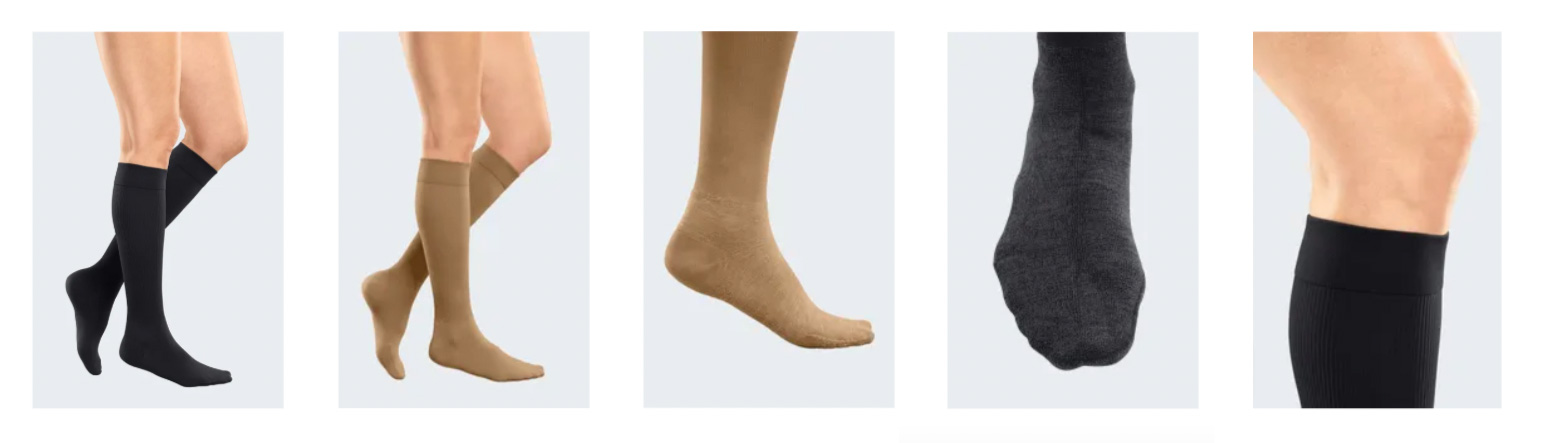
Not every “diabetic sock” on the market is actually built for the job. When we help clients in Ottawa choose compression socks for diabetes, we look for a few specific features:
Medical-grade options like the mediven angio compression stocking are built specifically around these needs. It’s designed for people managing venous disease alongside mild to moderate PAD and/or diabetes, with Merino-plush padding through the entire foot, a special pressure-relief seam at the toes, and an extra-wide, constriction-free cuff. Its safety for patients with diabetes and PAD has also been confirmed in a published clinical trial, which is the kind of evidence-backed reassurance that matters when you’re trusting a product to protect sensitive skin every day.
Safety down to the toes
Vein therapy with concomitant PAD and diabetes mellitus
You may want to ask about diabetic-specific compression socks if you experience:
If swelling is a regular concern for you, our article on compression socks for swelling covers the causes and when it’s worth wearing compression during the day.
Chronic venous diseases – Pathology and therapy
Chronic venous diseases – underlying disease and comorbidities
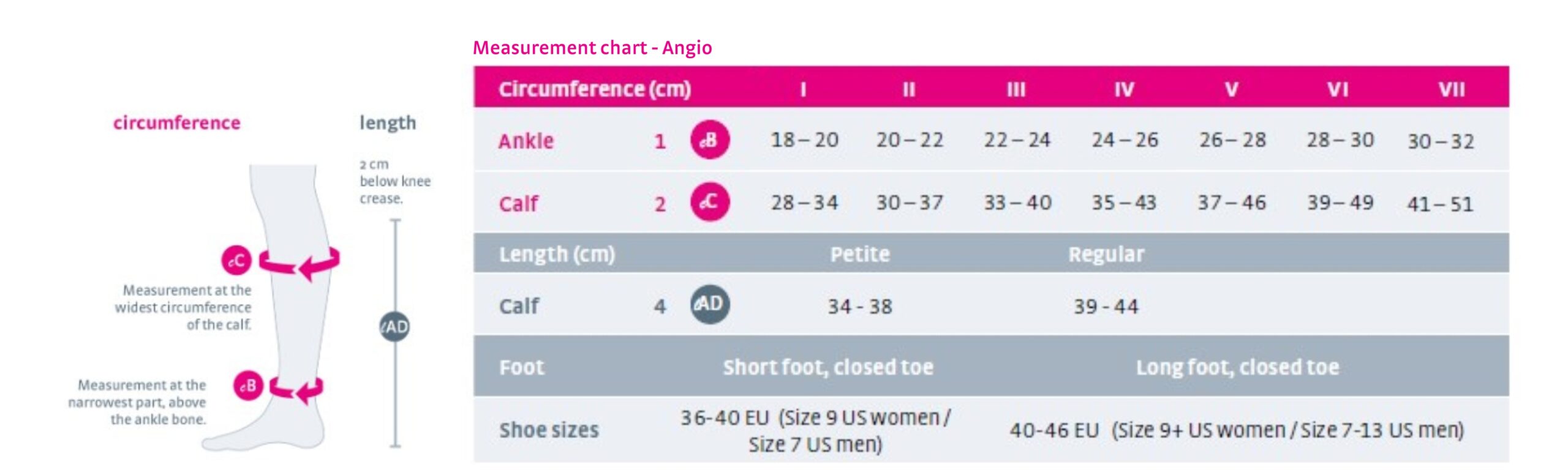
With any compression garment, sizing affects how well it works. With diabetic feet, sizing affects whether it’s safe to wear at all. A sock that’s too tight can restrict circulation in a foot that already has compromised blood flow. One that’s too loose can bunch, rub, and create the exact friction points diabetic skin can’t afford.
This is why we don’t recommend guessing sizes off a chart alone. Our team takes precise, personalized measurements, and we offer free in-home measurements across Ottawa and the surrounding area for anyone who finds it difficult to get to us in person. It’s a small extra step that makes a real difference in comfort, safety, and how consistently the socks actually get worn.
With over 20 years in the medical equipment industry, we’ve fitted compression hosiery for a wide range of needs, including clients managing diabetes, PAD, and chronic venous conditions together. As a Medi-certified provider, we carry medical-grade compression socks designed for exactly this kind of situation, not generic drugstore hosiery.
When you come to us, you get:
We also offer broader product consultations if you’re not sure whether compression socks are the right fit for your situation, or if you need to explore other daily living or mobility support alongside them.
Managing diabetes already takes daily attention. The right compression socks shouldn’t add another risk to that routine; they should support it. If you’re unsure where to start, our team is happy to help you figure out what’s right for your feet.
Yes, in most cases, but they should be diabetic-specific styles with padded, seamless-feeling toe areas and gentle graduated pressure. A healthcare provider or trained fitter should confirm the right compression level for your situation.
Contact us at (613) 842-7474 or visit our Ottawa location. We’ll walk you through your options, take precise measurements, and help you find a compression sock that’s actually safe and comfortable for your feet.